

0
Oil and gas prices declined sharply on Tuesday after U.S. President Donald Trump suggested the conflict involving Iran was largely finished. He told reporters that the war was “very complete, pretty much,” a remark that helped calm fears about prolonged disruptions to global energy supplies.
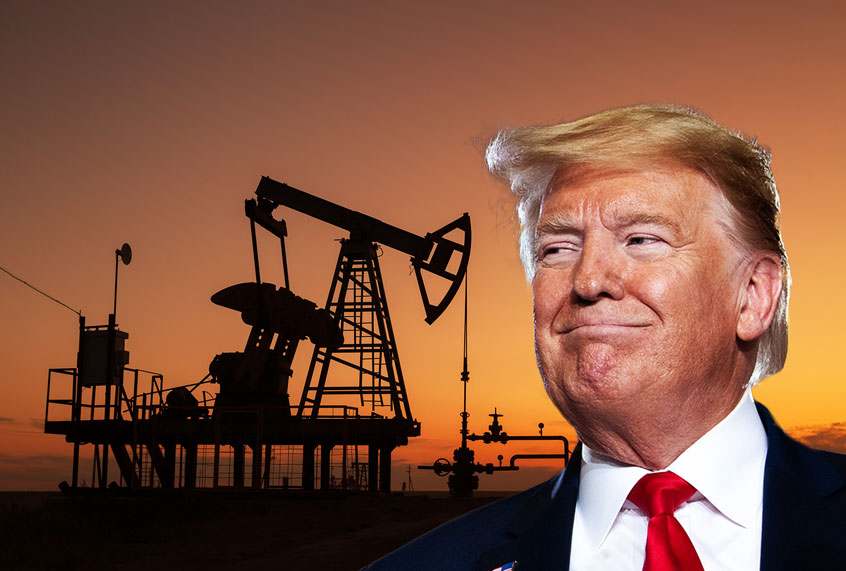
Oil markets had been extremely volatile in recent days. On Monday, crude prices surged close to $120 per barrel as traders worried that the conflict could significantly interrupt oil shipments from the Middle East. However, after Trump’s comments, prices retreated quickly, slipping below $90 per barrel.

Despite the pullback, oil remains well above levels seen before the conflict began. The easing in energy prices nevertheless helped support global equities, with stock markets recovering after earlier declines linked to rising oil costs.
Concerns about supply remain high, particularly because of the situation in the Strait of Hormuz, one of the world’s most critical shipping routes for energy. Roughly 20% of global oil supply normally passes through this narrow channel. Since the fighting intensified more than a week ago, vessel traffic in the area has slowed dramatically.
Amin Nasser, chief executive of Saudi Arabia’s state oil giant Aramco, warned that a prolonged blockage of the waterway could lead to serious economic consequences. He noted that global oil inventories are already at their lowest levels in around five years, meaning continued disruptions could quickly tighten supply further.
“The longer this situation lasts, the greater the impact it could have on the global economy,” Nasser said.
Price swings continued throughout Tuesday’s trading session. Oil briefly dropped to around $82 per barrel after U.S. Energy Secretary Chris Wright posted on social media that an oil tanker had been successfully escorted through the Strait of Hormuz by U.S. forces. However, the message was later removed, and the White House confirmed that the U.S. Navy had not escorted any tankers through the passage. Following the clarification, crude prices rebounded toward $86.
Analysts are also warning that persistently higher energy costs could push inflation higher in several economies. The UK government’s fiscal watchdog suggested inflation there could approach 3% by the end of the year if oil prices remain elevated, exceeding earlier forecasts.
Meanwhile, the International Energy Agency held another meeting with G7 countries on Tuesday to explore ways to stabilise the global oil market. One option under discussion is the release of strategic oil reserves to offset potential supply disruptions.
Trump earlier indicated that the U.S. operation was intended to be short-lived. Speaking at a press conference in Florida, he described the intervention as a brief mission aimed at eliminating threats. In a separate post on social media, he warned that any attempt by Iran to halt oil shipments through the Strait of Hormuz would trigger a much stronger U.S. response.
Iran responded by stating that its armed forces would prevent oil exports from the region, rejecting Trump’s statements.
Although Trump’s remarks eased fears that the conflict could drag on indefinitely, energy markets remain tense. Brent crude still trades well above the roughly $73 per barrel level recorded before the conflict between the U.S., Israel, and Iran escalated at the end of February.
Higher crude prices are already affecting fuel costs. In the United States, average gasoline prices have climbed above $3.50 per gallon, up from about $2.92 a month ago. Diesel prices have also risen sharply. In the UK, petrol and diesel prices have both increased since late last month, according to data from the RAC.
Natural gas prices have also moved lower recently, with UK month-ahead contracts falling to around 119p per therm after reaching a peak of 171p earlier.
Market analysts say energy markets remain highly sensitive to developments in the conflict. Alberto Bellorin, founder of energy investment firm InterCapital Energy, said the temporary drop in oil prices has given markets a chance to breathe, but conditions remain extremely unstable.
According to Bellorin, oil prices are likely to remain volatile, rising quickly if tensions intensify and falling again if signs of de-escalation emerge.
Disclaimer: The information contained herein (1) is proprietary to BCR and/or its content providers; (2) may not be copied or distributed; (3) is not warranted to be accurate, complete or timely; and, (4) does not constitute advice or a recommendation by BCR or its content providers in respect of the investment in financial instruments. Neither BCR or its content providers are responsible for any damages or losses arising from any use of this information. Past performance is no guarantee of future results.v
Lebih Liputan




Pendedahan Risiko:Instrumen derivatif diniagakan di luar bursa dengan margin, yang bermakna ia membawa tahap risiko yang tinggi dan terdapat kemungkinan anda boleh kehilangan seluruh pelaburan anda. Produk-produk ini tidak sesuai untuk semua pelabur. Pastikan anda memahami sepenuhnya risiko dan pertimbangkan dengan teliti keadaan kewangan dan pengalaman dagangan anda sebelum berdagang. Cari nasihat kewangan bebas jika perlu sebelum membuka akaun dengan BCR.
BCR Co Pty Ltd (No. Syarikat 1975046) ialah syarikat yang diperbadankan di bawah undang-undang British Virgin Islands, dengan pejabat berdaftar di Trident Chambers, Wickham’s Cay 1, Road Town, Tortola, British Virgin Islands, dan dilesenkan serta dikawal selia oleh Suruhanjaya Perkhidmatan Kewangan British Virgin Islands di bawah Lesen No. SIBA/L/19/1122.
Open Bridge Limited (No. Syarikat 16701394) ialah syarikat yang diperbadankan di bawah Akta Syarikat 2006 dan berdaftar di England dan Wales, dengan alamat berdaftar di Kemp House, 160 City Road, London, City Road, London, England, EC1V 2NX. Entiti ini bertindak semata-mata sebagai pemproses pembayaran dan tidak menyediakan sebarang perkhidmatan perdagangan atau pelaburan.


 English
 简体中文
简体中文
 繁體中文
繁體中文
 Bahasa
Melayu
Bahasa
Melayu
 Tiếng
Việt
Tiếng
Việt
 ไทย
ไทย
 日本語
日本語
 한국어
한국어
 ភាសាខ្មែរ
 español